Sertifikat-removebg-preview2
AGRIBUSINESS STUDY PROGRAM

Faculty of Science and Technology

Building from the Margins: How Prabowo’s ‘Merah Putih’ Village Cooperatives Will Key Indonesia’s 2045 Golden Vision
Home » Latest News  »  Building from the Margins: How Prabowo’s ‘Merah Putih’ Village Cooperatives Will Key Indonesia’s 2045 Golden Vision
Building from the Margins: How Prabowo’s ‘Merah Putih’ Village Cooperatives Will Key Indonesia’s 2045 Golden Vision

National Cooperative Day has marked a new chapter in the direction of Indonesia's economic policy. Under the leadership of President Prabowo Subianto, the government is placing the strengthening of rural-based economies at the top of its agenda. A concrete manifestation of this strategy is the optimization of the "Merah Putih" (Red and White) Village/Sub-district Cooperatives.

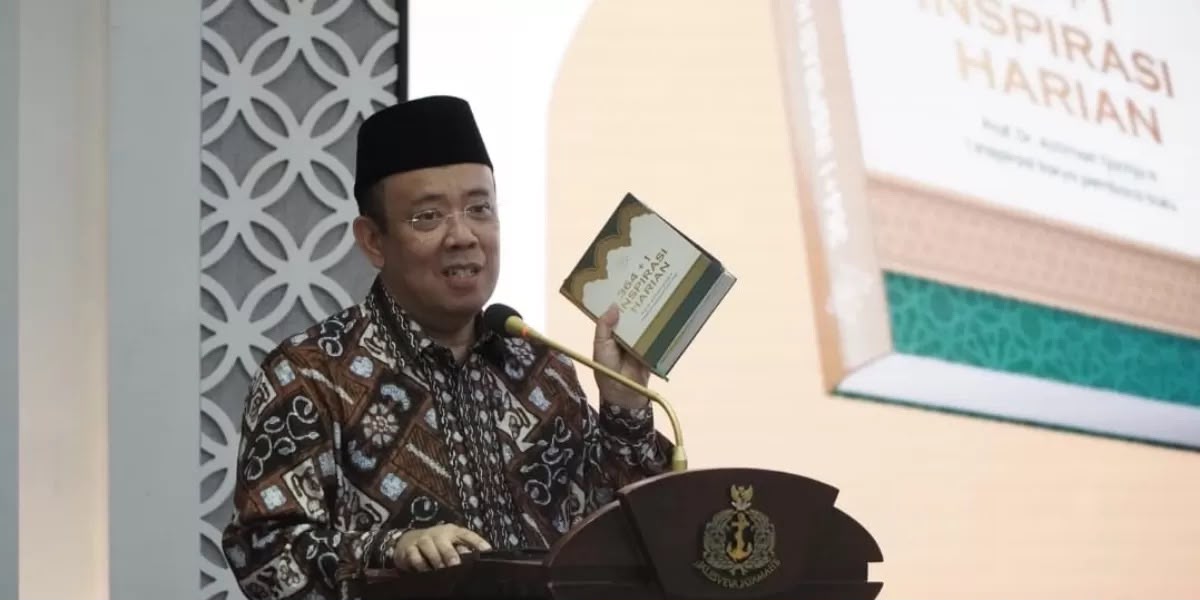
This strategic move has garnered strong endorsement from the academic community. Professor Achmad Tjachja Nugraha,a prominent Professor of Agribusiness from the Agribusiness Study Program at UIN Syarif Hidayatullah Jakarta, noted that President Prabowo’s decision to prioritize grassroots cooperatives serves as a direct implementation of the state constitution.

"This policy aligns perfectly with the spirit of Article 33 of the 1945 Constitution, which positions cooperatives as the main pillar of the national economy. Strengthening our national economy must begin by revitalizing the livelihoods of village residents. When the rural economy is robust, our macroeconomic foundation will naturally become far more resilient," Prof. Achmad explained in a statement.

According to Prof. Achmad, any economic development model that neglects rural areas will only produce a fragile national economic structure. Therefore, transforming local institutions like cooperatives is seen as the most ideal driver for widespread community welfare.

Beyond Conventional Savings and Loans

In his view, the Merah Putih Village Cooperatives must not be confined to conventional financial activities. Modern cooperatives need to evolve into comprehensive business ecosystems for rural communities, encompassing highly productive sectors such as agribusiness, fisheries, logistics, trade, and serving as growth incubators for local MSMEs.

With integrated management, the presence of these cooperatives is expected to shorten distribution chains significantly.Consequently, this will boost the added value of local products, create new employment opportunities in rural areas, and independently secure national food sustainability.

The Dawn of 'Koperasipreneurship' and Digitalization

To tackle contemporary challenges, Prof. Achmad suggests that the management of the Merah Putih Village Cooperatives adopt the concept of koperasipreneurship (cooperative-based entrepreneurship), which emphasizes innovation, creativity,and financial independence.

"Internal management must be built upon the principles of professionalism, transparency, and high accountability.Concurrently, adopting digital technology is absolutely essential so that village cooperatives can remain competitive with modern corporations and deliver highly efficient services to their members," he added.

Nevertheless, he reminded stakeholders that achieving the grand vision of Indonesia Emas (Golden Indonesia) 2045 through rural economics cannot be done in isolation. It demands solid, cross-sector collaboration—ranging from synergy between the central and regional governments, intellectual contributions from universities, support from the business sector, to the active participation of the villagers themselves.