

Ahead of the month of Ramadan, food price increases almost always occur in various regions of Indonesia. Essential commodities such as rice, cooking oil, shallots, chili, sugar, wheat flour, and fish often experience significant price hikes. This phenomenon is not merely a seasonal occurrence, but an economic issue influenced by multiple interconnected factors.
One of the main drivers of rising food prices is the increase in public demand. Changes in consumption patterns ahead of Ramadan lead to higher demand for food supplies for pre-dawn meals, breaking the fast, and preparations for Eid al-Fitr. Higher consumption compared to ordinary days causes demand in the market to surge. When demand increases while the availability of goods does not rise proportionally, an imbalance between demand and supply occurs, pushing food prices upward.
The surge in demand is not always matched by sufficient supply. Food production is generally seasonal and cannot be increased significantly in a short period of time. In addition, extreme weather conditions can disrupt harvest yields and slow down the distribution of food products to markets. Limited supply under these conditions makes prices more sensitive to rising demand.
Distribution constraints also contribute to rising food prices. Increased transportation costs due to higher fuel prices, traffic congestion, and long delivery distances raise distribution expenses. These additional costs are ultimately passed on to consumers through higher retail prices.
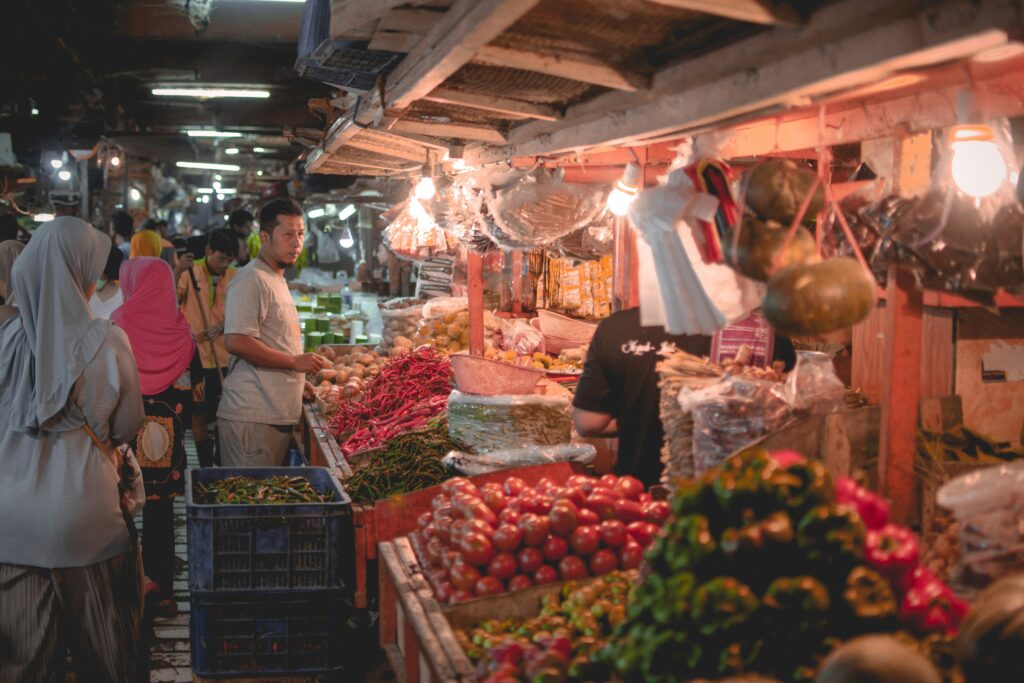
Beyond demand and supply factors, traders’ expectations of increased purchases ahead of Ramadan also influence price movements. Anticipation of higher consumer demand encourages some traders to raise prices in advance as a precautionary measure. In certain cases, market psychology may also trigger speculative behavior, such as hoarding by certain parties, which further reduces market supply and accelerates price increases.
The rise in food prices ahead of Ramadan is a multi-factor issue that requires serious attention. Without balanced management of demand and distribution, price spikes are likely to recur each year and directly affect people’s purchasing power.
Source:
- Universitas Islam Indonesia (UII). Harga Sembako Naik Setiap Ramadan: Siklus Ekonomi yang Terus Berulang. https://economics.uii.ac.id/harga-sembako-naik-setiap-ramadan-siklus-ekonomi-yang-terus-berulang/
- Liputan6.com. Mengapa Harga Pangan Selalu Naik Tiap Menjelang Ramadhan? Ini Biang Keroknya. https://www.liputan6.com/regional/read/5933939/mengapa-harga-pangan-selalu-naik-tiap-menjelang-ramadhan-ini-biang-keroknya