
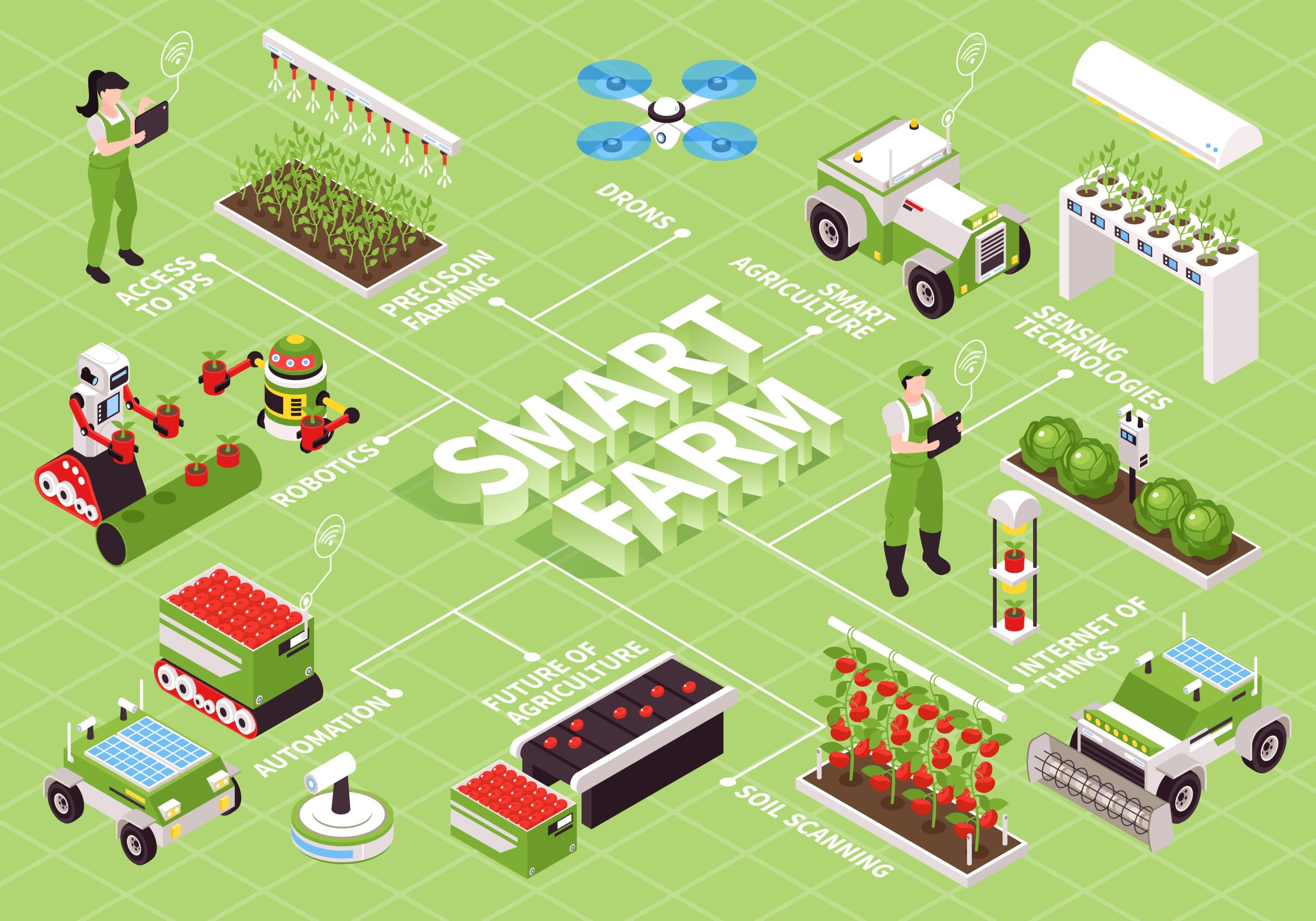
The development of digital technology has driven major changes in the agricultural sector. Artificial Intelligence (AI) is now being utilized to improve efficiency, productivity, and agricultural sustainability. This technology helps farmers manage land, monitor crop conditions, and make data-driven decisions more quickly and accurately.
One sector that is increasingly adopting AI technology is urban farming. Urban farming refers to agricultural practices carried out in urban areas by utilizing limited spaces such as home yards, rooftops, vacant land, and multi-story buildings. This concept has emerged as a response to limited agricultural land, growing food demand among urban communities, and cities’ dependence on food supplies from outside regions.
In urban farming practices, the role of AI is crucial to ensure agricultural activities remain efficient despite being carried out in limited spaces. AI technology integrated with sensors and the Internet of Things (IoT) enables real-time monitoring of crop conditions, including soil moisture, temperature, and plant nutrient requirements. The data are then processed to determine more precise schedules for irrigation, fertilization, and harvesting.
In addition, the use of drones and high-tech sensors supports AI-based urban farming management. Drones are utilized to monitor crop conditions from above, detect areas experiencing plant stress, and enable the creation of precision maps that can be used to optimize the distribution of fertilizers and pesticides. Data collected from drones, soil sensors, and weather information are then processed using artificial intelligence algorithms to provide recommendations on the best timing for planting, watering, and harvesting. Research by Zhou et al. (2020) shows that the use of drones in agriculture can improve monitoring efficiency by up to 50 percent compared to traditional methods.
The application of AI in urban farming also includes early detection of plant diseases and pests through image recognition technology. Urban farmers can identify plant conditions simply by taking photos of problematic areas using digital devices. Meanwhile, AI is also used in vertical farming, hydroponic, and aquaponic systems to automatically regulate lighting, water circulation, and plant nutrition.
The use of AI is considered capable of increasing crop yields while reducing water and fertilizer use. This technology also helps address labor limitations through the automation of various agricultural processes. However, challenges remain, including limited technological understanding and uneven infrastructure.
Source:
- Zhou, J., et al. (2020). Applications of drone technology in precision agriculture: A review. Remote Sensing, 12(2).
- Benke, K., & Tomkins, B. (2017). Future food-production systems: vertical farming and controlled-environment agriculture. Sustainability: Science, Practice and Policy, 13(1).
- Pratio, G. A., et al. (2024). Praktek smart farming pada kota-kota di dunia. Jurnal Bengawan Solo: Pusat Kajian Riset dan Inovasi Daerah Kota Surakarta, 3(2)
- Badan Riset dan Inovasi Nasional (BRIN). Peran Teknologi AI dalam Pengembangan Drone dan Sensor di Bidang Pertanian. https://brin.go.id/news/115459/peran-teknologi-ai-dalam-pengembangan-drone-dan-sensor-di-bidang-pertanian
- Artificial Intelligence Center Indonesia (AICI). Aplikasi AI dalam Pertanian: Revolusi Pertanian dengan Kecerdasan Buatan. https://aici-umg.com/article/aplikasi-ai-dalam-pertanian